Why is it important to reduce salt for heart health?
Salt is made up of sodium and chloride. Sodium is essential for your body, helping with nerve signals, muscle movements and fluid balance. However, too much sodium puts extra pressure on your blood vessels, which can increase blood pressure and lead to serious conditions like heart disease, stroke and kidney problems.
High blood pressure is one of the biggest contributors to heart disease. Reducing the amount of salt in your diet is one of the most effective ways to help lower your blood pressure and protect your heart.
Research shows that cutting back on salt by just 3 grams a day (which is about 1000 mg of sodium) could lead to fewer people needing blood pressure medication, and could help reduce deaths from stroke and heart disease.
Where is salt hiding in your food?
Most of the salt we eat doesn't come from table salt. Around 75 to 80% of the sodium we eat comes from processed and packaged foods, where salt is added during manufacturing to preserve shelf life or boost flavour.
You might not always taste it, but some everyday foods can be surprisingly high in salt.
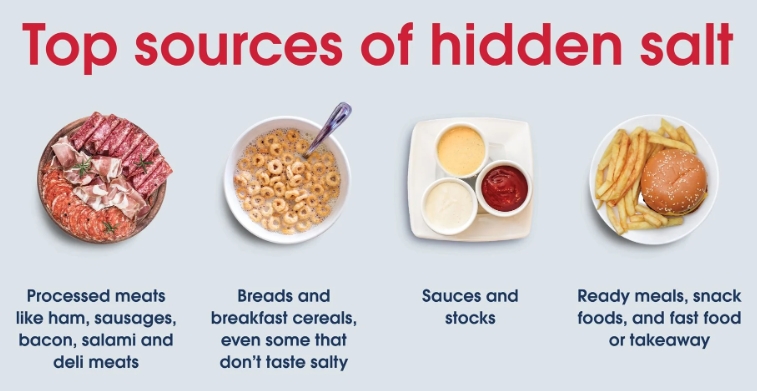 These foods are often called “discretionary foods,” meaning they’re not essential and are usually higher in salt, saturated fat, or added sugars. They tend to take the place of healthier options like vegetables, fruits, and wholegrains in our diets.
Even some foods that seem healthy like some soups, baked beans, or cheese, can be high in sodium. This is why reading food labels can help you make better choices and support your heart health.
Source: https://www.heartfoundation.org.au/healthy-living/healthy-eating/salt-and-heart-health